
Truth Cards
Names what's true when a big feeling is telling a different story.
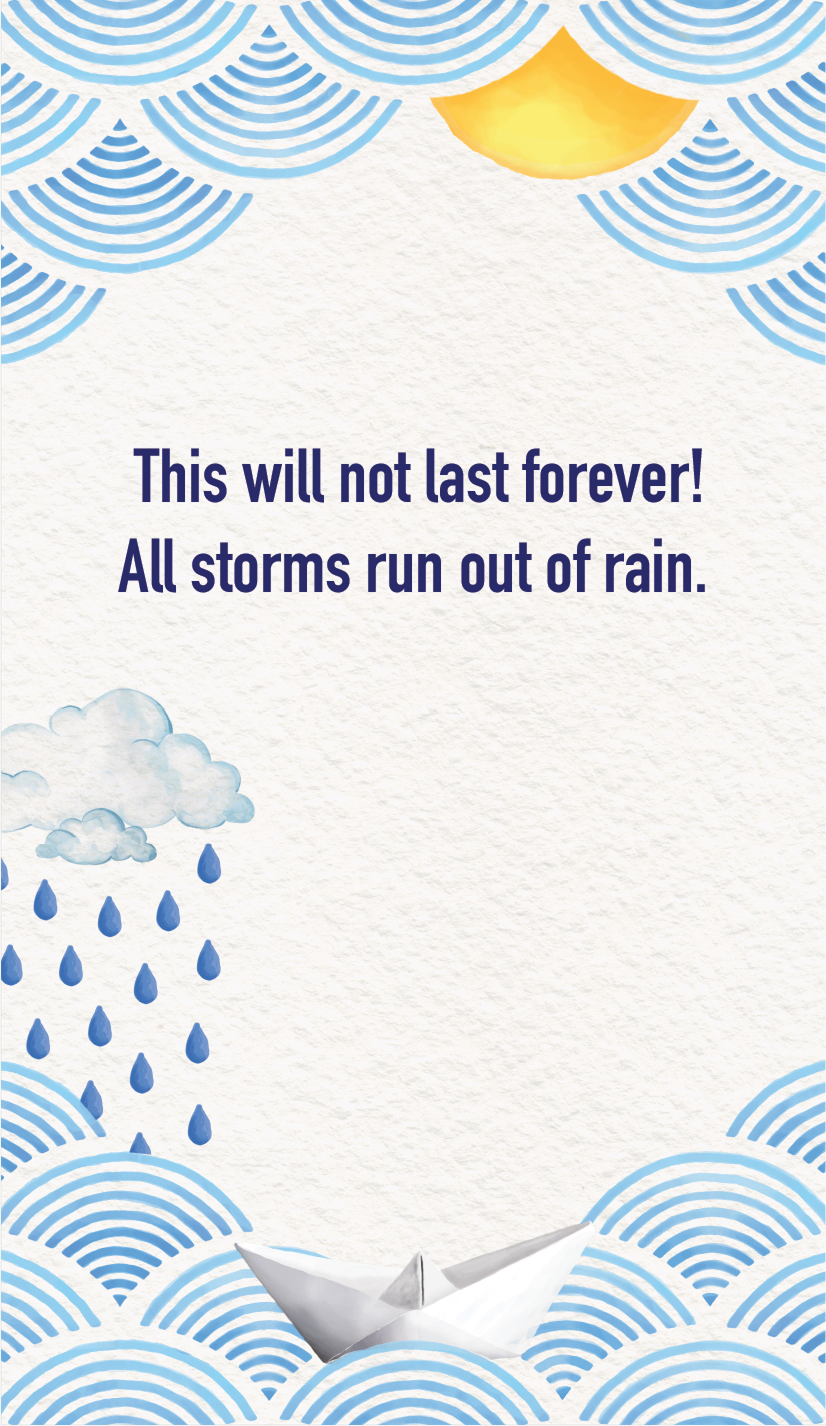
“This will not last forever! All storms run out of rain.”
At home
Read one out loud in the middle of the storm — no explaining required.
Mindfulness here isn't sitting still with your eyes closed. It's a set of body-first practices — breath, movement, grounding — that help a child feel safe enough to think, and that work just as well for the grown-up in the room.
You don't have to say the perfect thing. Your calm presence matters more than perfect words.
“Let's do a sea star breath together.”
“Where do you feel that in your body?”
“I need a shell minute too.”
“Your body is doing its job. We can help it settle.”
Inside the Power Card Deck are four kinds of cards. These are the ones families reach for with this topic.
Steady sentences to read while the body comes back down.
“This will not last forever! All storms run out of rain.”
Reminders that hold once the breathing has done its work.
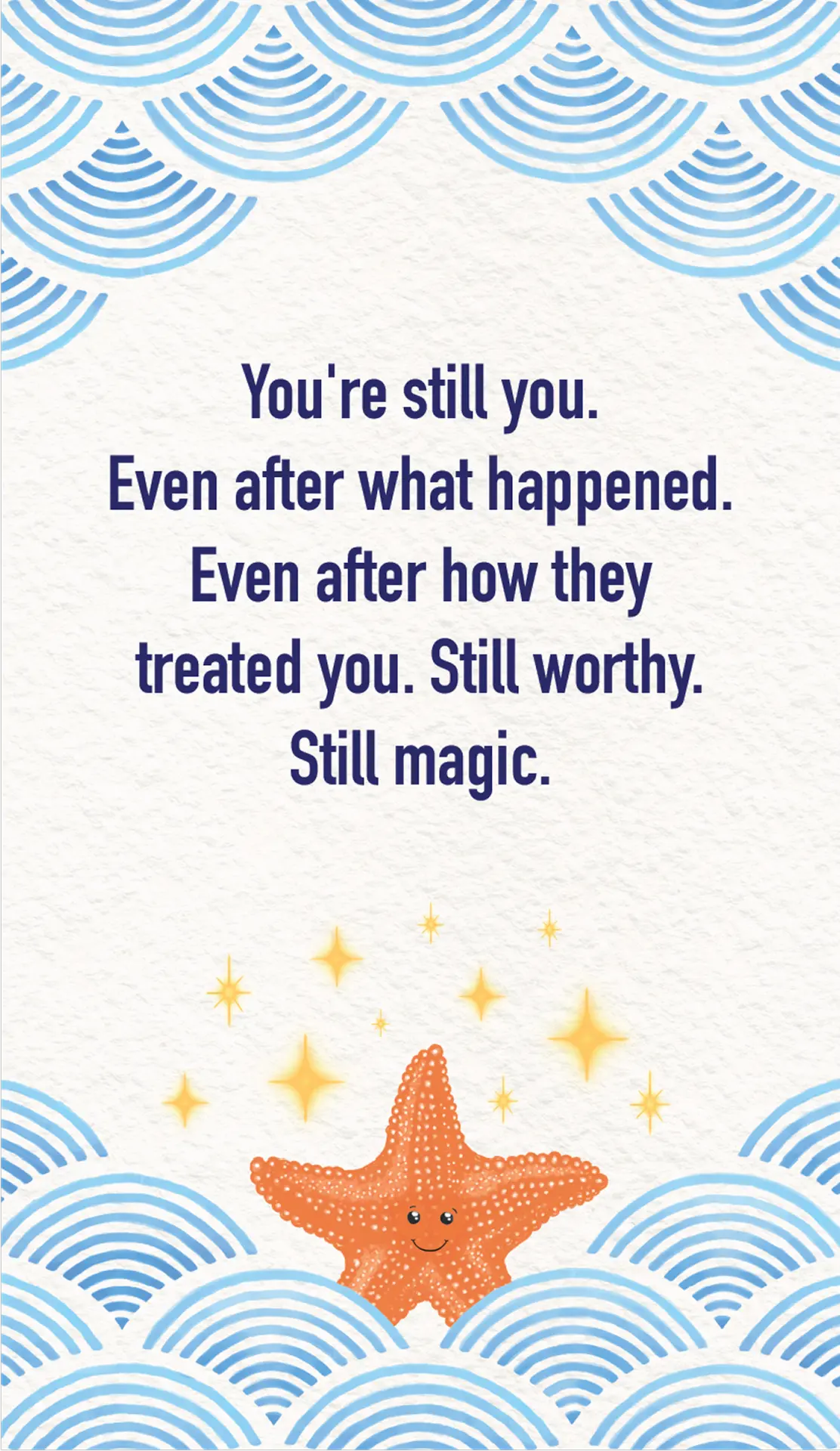
“You're still you. Even after what happened. Still worthy. Still magic.”

Simple ways to help kids identify, understand and talk about big emotions while building emotional literacy and regulation skills.
September 8, 2026

Discover 5 signs your child may need help building emotional regulation. Learn effective tools for building emotional resilience in children.
July 20, 2025

Uncover the truth about meditation with '3 Common Meditation Myths Debunked' - discover how to embrace the practice without the pressure.
February 18, 2024
When you've worked through a hard moment together, these cards help continue the conversation — one card, one step, whenever your child needs it.
Names what's true when a big feeling is telling a different story.
“This will not last forever! All storms run out of rain.”
At home
Read one out loud in the middle of the storm — no explaining required.
Gives a child something steady to hold on to about who they are.
“You're still you. Even after what happened. Still worthy. Still magic.”
At home
Leave one on a pillow, in a lunchbox, or read it at bedtime.
Gives them the words when speaking up feels impossible.
“Words to try when something doesn't feel okay.”
At home
Practise the line together before the moment it's needed.
Turns a hard moment into one small, doable next step.
“One step you can take today — small counts.”
At home
Use it after the feeling settles, when the body is ready to think.
Moves the feeling out of the body through the hands.
“Draw the anger. Scratch, scribble, cover the whole space. Then tear it.”
At home
Hands-on and physical — drawing, tearing, folding, letting go.
Children often can't say what's wrong — but they can draw it, scribble it, fold it, or tear it up. Creative journaling gives feelings a place to go that doesn't depend on finding the right words.
"Draw what today felt like. You don't have to explain it — just put it on the page."